Questio - Gamified Challenge Platform for Kids
PROJECT OVERVIEWKids today are deeply engaged with short-form video platforms—but these experiences are often passive, addictive, and lack meaningful developmental value. At the same time, parents struggle to encourage productive behaviors, and brands lack safe, structured ways to engage younger audiences.
This project explores the design of a challenge-first platform that transforms passive consumption into active participation, combining digital creativity with real-world experiences.
Questio empowers kids to watch, create and do, while parents maintain full visibility and control—supported by an AI-driven system that balances engagement with personal growth.
❋ IndustryEdTech
B2C
B2B2C
❋ PlatformMobile App
❋ ServicesProduct Design
SaaS Design
Dashboard Design
Data Visualization
❋ ToolsNotion
Maze
Figma
Stark

PROBLEMChildren, parents and brands face a misalignment in today’s digital ecosystem
→ Kids are drawn to highly engaging but low-value content loops
→ Platforms encourage passive scrolling instead of active participation
→ Brands lack safe, meaningful engagement channels for younger audiences
→ Parents struggle to:
Motivate healthy habits
Monitor digital behavior
Limit screen time effectively
SOLUTIONDesign a gamified, challenge-based platform where
→ Kids engage through both video and real-world activities
→ Progress is based on participation, effort, and skill development
→ Parents maintain full control and visibility
→ AI ensures a balanced, personalized experience
→ A “challenge-first” ecosystem, not content-first.
Kids can watch OR do
Offline activities are equally rewarded
Engagement loops are intentional, not addictive
Clear Goals Across All Stakeholders
Questio aligns the needs of kids, parents and the business by creating a shared value system centered on engagement, trust and growth.
While kids are motivated by fun, creativity, and rewards, parents gain visibility and control to encourage positive habits.
At the same time, the product drives retention and scalable partnerships — measured through increased participation, balanced activity and reduced passive screen time.
User Goals (Kids)
Have fun, create, connect
Earn rewards and progress
Business Goals
Increase retention
Build trust
Enable partnerships
User Goals (Parents)
Encourage positive habits
Maintain visibility and control
Success Metrics
↑ Engagement & retention
↑ Challenge completion
↑ Offline participation
↓ Passive screen time

Insight-Driven Research Based on Real Usage Patterns
User interviews focused on understanding what drives engagement for kids and trust for parents. Kids were asked about their favorite platforms, what makes apps fun and whether they prefer watching or actively participating—especially when rewards and social interaction are involved.
Parents were asked about concerns around screen time, what builds trust in a platform and how they currently encourage offline behaviors, including their expectations around control, visibility and reward systems.
FOR KIDSWhat do you like most about apps like TikTok or YouTube?
Do you prefer watching or doing activities? Why?
What makes an app fun enough to come back to?
Would you complete challenges if you got rewards?
Do you like playing alone or with friends?
FOR PARENTSWhat concerns do you have about your child’s screen time?
What would make you trust a platform?
How do you currently encourage offline activities?
Would you use a system to reward behaviors?
How much control do you want over your child’s activity?
Key Insights from Interviews
Kids shift from passive watching to active engagement when clear incentives and goals are introduced
Rewards drive active participation
Social interaction fuels engagement
Connecting with friends and participating together significantly increases motivation and retention
Tools that enable direction and support are more effective than limiting or blocking behavior
Parents prefer guidance over restriction
Real-world actions are more likely to happen when tied to rewards and clear outcomes
Offline activities need incentives
Parents are more confident when they can monitor activity and maintain control over their child’s experience
Trust is built through visibility and control
Design Decisions Driven by Research
Dual challenge system (video + real-world)
By understanding that kids enjoy both watching and doing, the product introduces two complementary challenge types—blending digital creativity with real-world action to create a more balanced experience
Equal rewards for offline actions
To ensure real-world activities are not overlooked, the system rewards offline and online participation equally—reinforcing that growth beyond the screen is just as valuable
Parent validation for real-world tasks
Given the importance of trust, parents are integrated into the experience by validating offline challenges, increasing accountability while maintaining involvement.
Controlled social layer (friends + circles)
Recognizing the importance of social interaction, a closed and moderated network allows kids to connect, collaborate, and share safely within parent-approved boundarie
AI-balanced engagement system
AI is used to dynamically balance screen-based and offline challenges, ensuring kids experience a healthy mix of activities rather than falling into passive consumption patterns

STRATEGYHome
Activity & Progress
Approvals
Rewards & Incentives
Social Controls
Screen Time & Balance
Settings & Permissions
The parent experience is designed as a lightweight control system—prioritizing visibility, quick approvals, and trust without overwhelming complexity.
The product structure separates intent (Play, Grow, Connect) to reduce cognitive load and guide kids toward meaningful action.
Reducing Cognitive Load Through Playful Design
Questio’s information architecture is designed around action, clarity, and progression, ensuring kids always know what to do next without falling into passive browsing.
The structure prioritizes core behaviors—completing challenges, building habits, and engaging socially—while keeping navigation simple and intuitive.
By separating Video Challenges and Habit Missions, and supporting them with clear pathways to progress, rewards, and social interaction, the platform creates a seamless flow that guides users from discovery to action to growth.
CORE STRUCTURE (KIDS)Home
Play (Video Challenges)
Grow (Habit Missions)
Friends (Social)
Profile (Progress + Rewards combined)
Gamified Challenges That Drive Real Growth
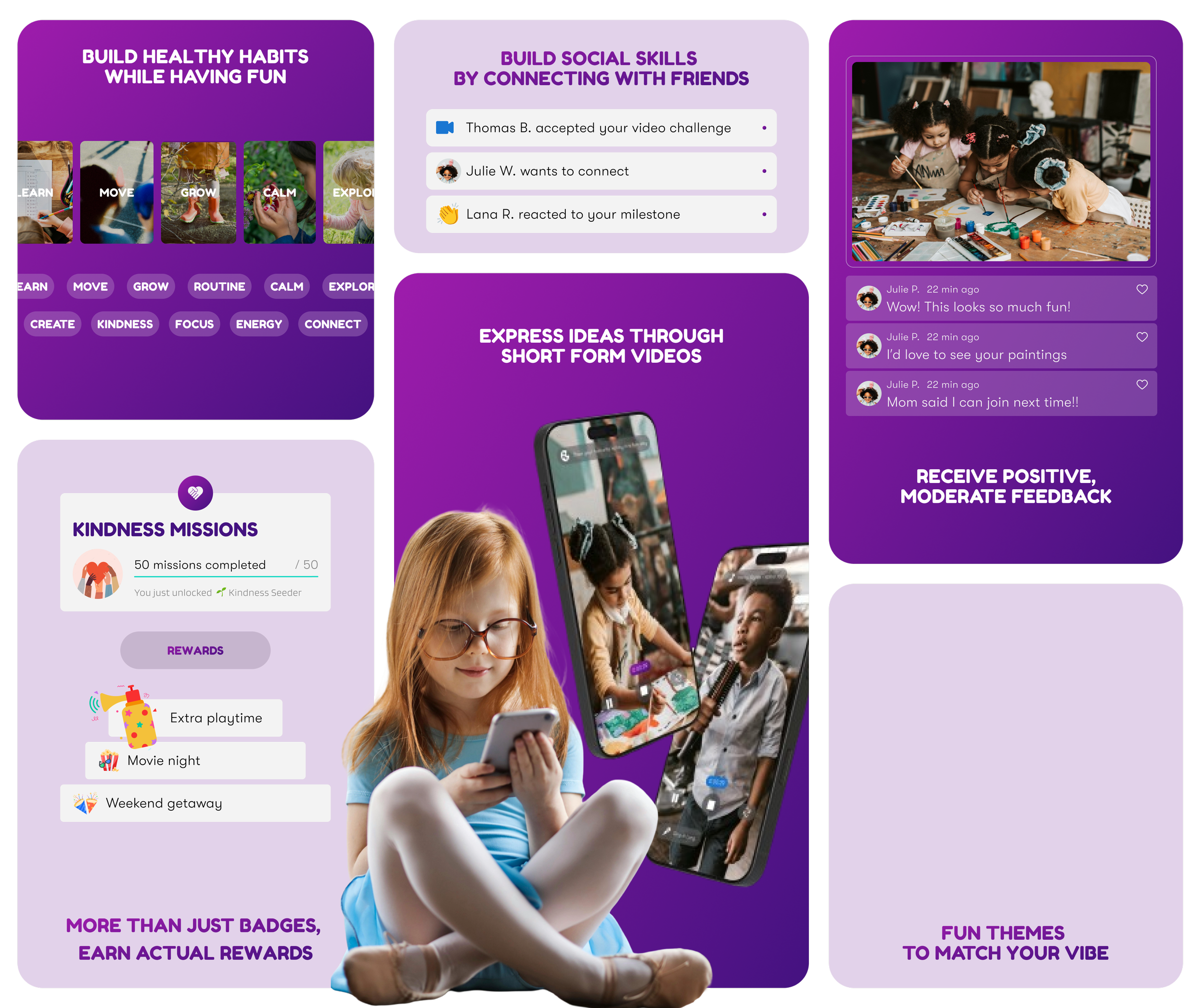
Gamified challenges in Questio are designed to go beyond entertainment, turning engagement into meaningful growth. By combining creative video tasks with real-world habit missions, the system rewards both participation and consistency—encouraging kids to develop skills, build routines, and stay motivated through play.
Gamified Challenges
That Drive Real Growth
Gamified challenges in Questio are designed to go beyond entertainment, turning engagement into meaningful growth. By combining creative video tasks with real-world habit missions, the system rewards both participation and consistency—encouraging kids to develop skills, build routines, and stay motivated through play.
Habit Building Missions

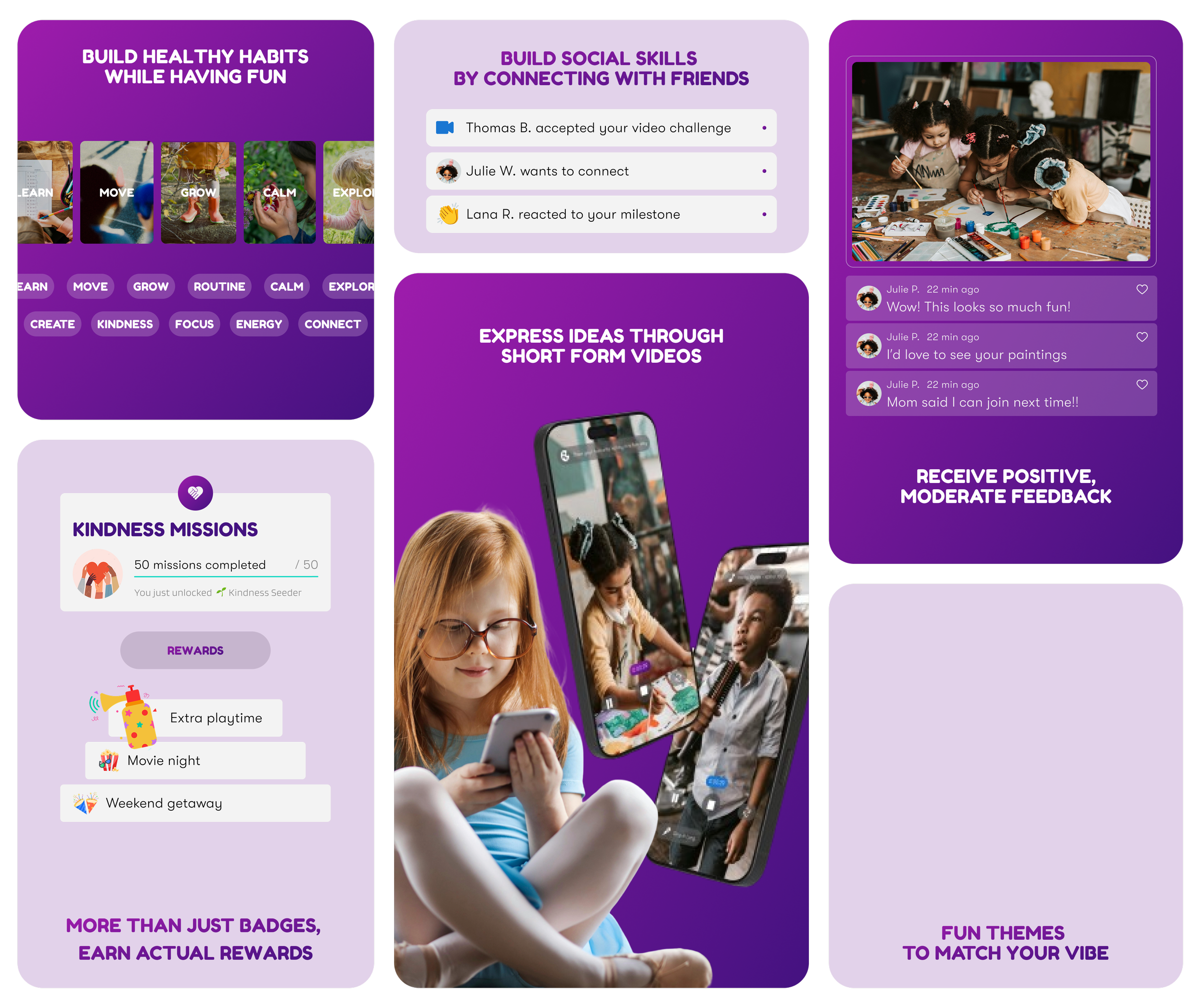
Habit Missions (Real-World Challenges) help kids build positive habits through simple, everyday actions that support physical and cognitive development. Each activity is designed to be completed in the real world and validated by parents, creating accountability while reinforcing consistent behavior. Together, these experiences connect digital motivation with meaningful real-life growth.
Build consistent, healthy habits through daily actions
Encourage physical activity and cognitive development
Reinforce accountability through parent validation
Turn everyday actions into rewarding progress
Parent-defined rewards (extra playtime, small treats)
Educational perks (apps, books, learning tools)
Experience-based rewards (park visit, movie night)
Unlockable in-app items (avatars, themes)
Safe Social Built for Kids (Bento)
Features
Parent-approved friends
Private circles (group challenges)
Reactions and moderated comments
Challenge sharing
Safety
No public exposure
AI moderation
Full parental control
👉 Social becomes collaborative, not performative
AI That Guides Behavior
Balances screen vs offline challenges
Personalizes recommendations
Supports validation of activities
Tracks growth instead of screen time
Moderates interactions
👉 AI acts as a behavioral guideSafe Social Built for Kids
Playful UI That Drives Action
Bright, kid-friendly visuals
Gamified elements (badges, XP)
Simple, intuitive flows
Solving Real Problems Through Design
Passive scrolling → Action-based challenges
Low value content → Skill-based progression
Parent distrust → Transparency + control
Offline disengagement → Reward system
Unsafe social → Closed ecosystem
UI That Builds Trust Through Simplicity

Clean layouts and strong hierarchy
High readability and contrast

Clean layouts and strong hierarchy
Data visualizations that explain — not overwhelm
Key Learnings
ENGAGEMENT CAN DRIVE GROWTH, NOT ADDICTIONWell-designed systems can motivate meaningful actions instead of passive consumption
PARENTS VALUE VISIBILITY
OVER RESTRICTION
Trust is built through transparency and control, not limitations
KIDS RESPOND TO ACTION, REWARDS AND SOCIAL INTERACTIONParticipation increases when experiences are interactive, incentivized, and shared.
BALANCE EMOTION AND DATAThe most impactful AI guides habits and decisions—not just recommendations